

Full-Arch FP1 · Maxilla
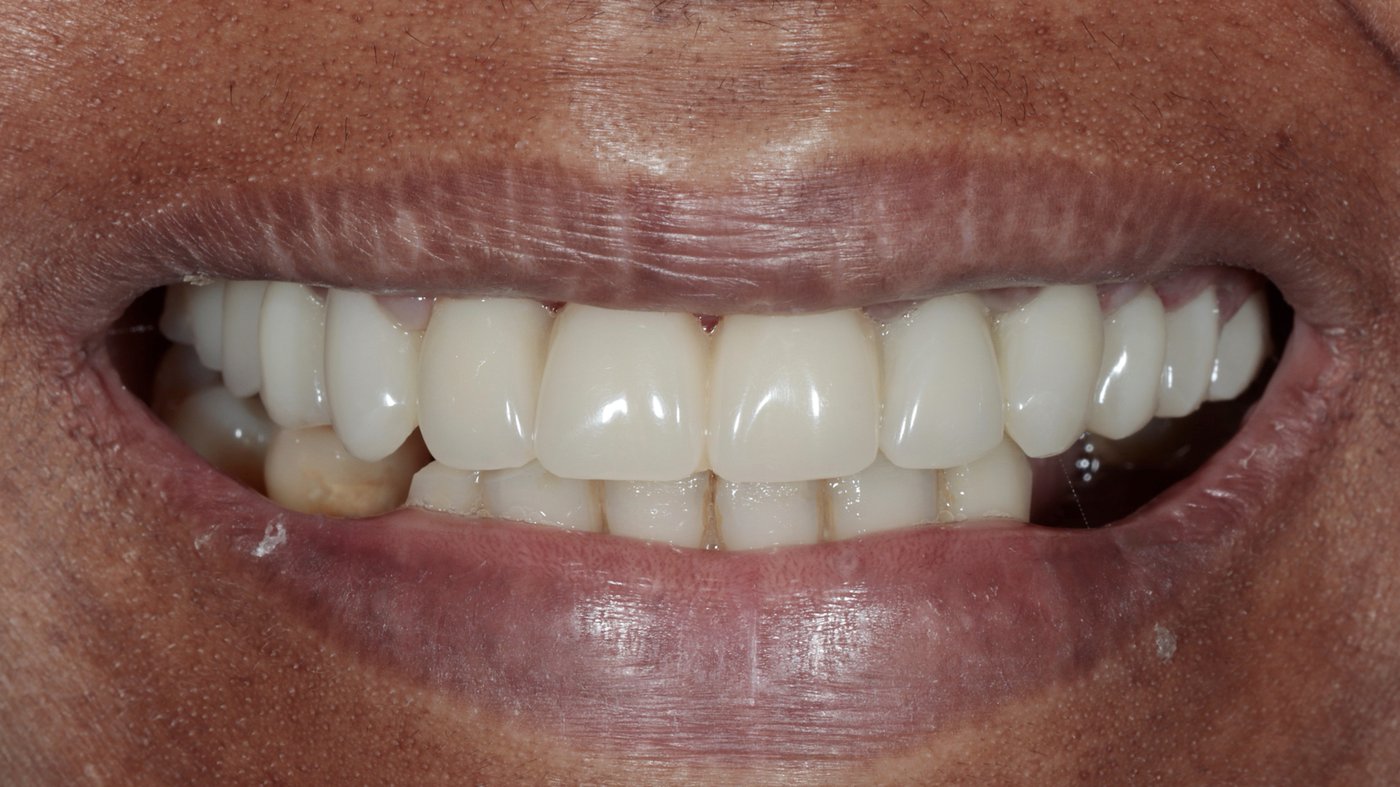
Natural aesthetic outcome at 3 years
Fractured, worn residual dentition rehabilitated with a fixed FP1 prosthesis designed to reproduce natural gingival architecture and tooth form.
View caseFull-arch rehabilitation and mucogingival surgery
for results that last — and look natural.
Dr. Miguel Mendes de Oliveira is a specialist in full-arch implant rehabilitation (All-on-X / FP1) and mucogingival microsurgery. Faculty at OHI-S. International lecturer. Committed to the perio-prosthetic interface where most outcomes are decided.
Follow-up photographs from real patients, from three months to seven years.
Fractured, worn residual dentition rehabilitated with a fixed FP1 prosthesis designed to reproduce natural gingival architecture and tooth form.
View case

Two Miller Class III recessions treated in one session with a tunnelling technique and a partly epithelialised tuberosity graft.
View case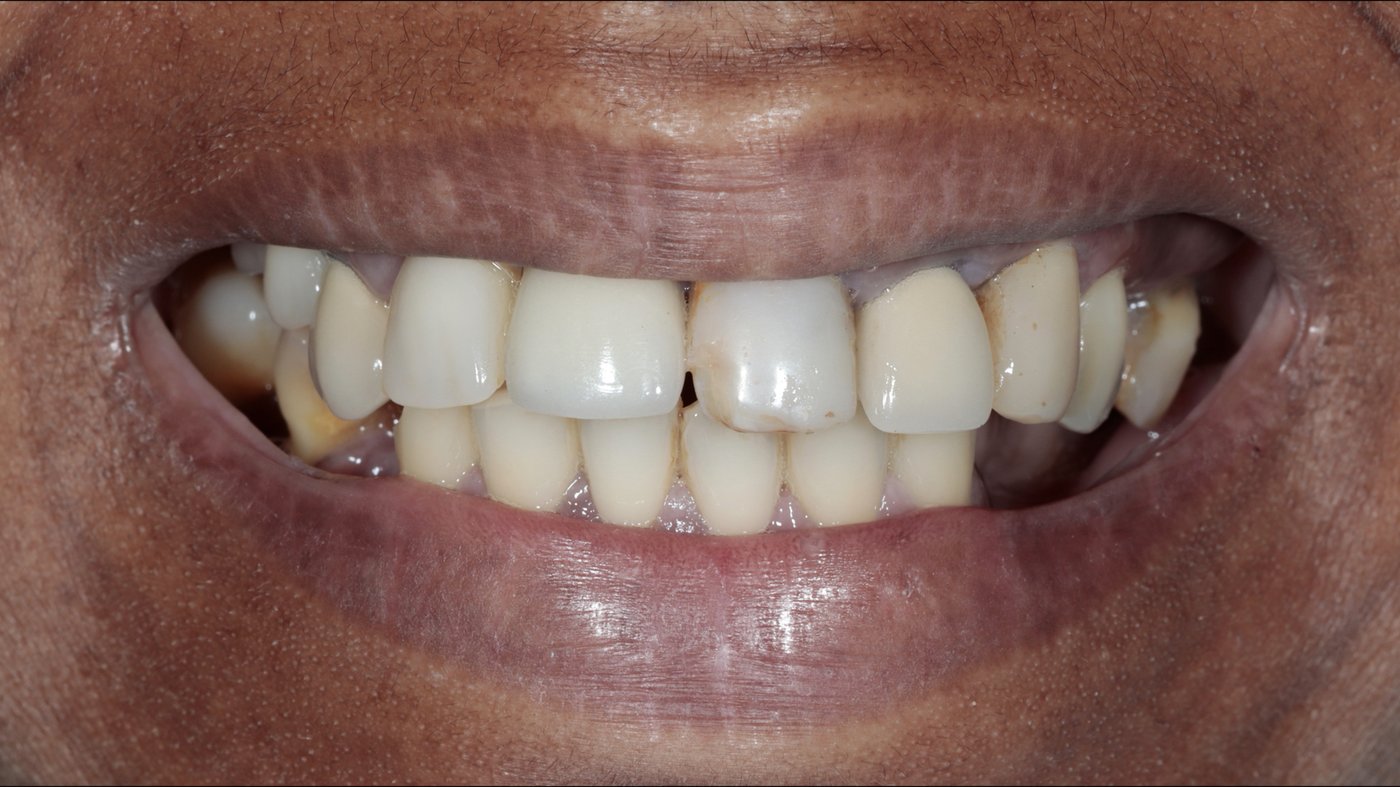
A severely worn and fractured dentition replaced with an immediate FP1 provisional, aesthetically complete at day 15.
View caseA clear sequence, whether you live in Lisbon or travel to be treated.
Radiographs, photographs and the plan you were given. Use the second-opinion request, or book a video consultation if you prefer to talk first.
A clinical perspective on diagnosis and options, before any commitment to treatment.
Photography, CBCT and digital planning define the treatment. Treatment fees are given only after the diagnosis and plan.
Surgery and prosthetic phases in Lisbon, with structured follow-up afterwards.
Travelling for treatment? See how a stay in Lisbon is organised.
International patientsTwelve years of clinical practice at the interface between implantology and periodontics, with a focus on full-arch FP1 rehabilitation and mucogingival microsurgery. Faculty at OHI-S and international lecturer.
More about Dr. MMO11 reviews on Google
Reviews of Dr. Miguel Mendes de Oliveira's Google profile are public and available in full at the source. The count and rating may change as new reviews appear.
5.0 on Google, as of 4 October 2026 · 11 reviews
Read the reviews on Google ↗Full-arch rehabilitation replaces all teeth in an arch with a fixed prosthesis supported by 4–6 implants. The FP1 approach creates a tissue-level fixed prosthesis that looks and functions like natural teeth. Planning begins with the final smile design and works backwards to implant placement.
The emergence profile is the shape of the prosthetic component as it passes through soft tissue — from the implant platform to the visible crown. A correctly designed emergence profile maintains biological width, supports papilla formation, and determines whether peri-implant tissue remains stable over years.
Yes — and the most common cause is peri-implantitis. Risk factors include inadequate emergence profile design, insufficient keratinized tissue, and poor maintenance protocols. Proper initial planning dramatically reduces this risk.
Guided implant surgery uses digital planning and surgical guides to place implants at the exact position, angulation, and depth planned pre-operatively — translating a digital plan into executed reality with submillimetre accuracy.
A minimum of two: a planning consultation (diagnosis, photography, DSD, CBCT, treatment plan) and a surgical consultation (guided implant placement and immediate provisionalization). International patients typically complete both within a 5–7 day visit to Lisbon.
Mucogingival surgery addresses the quantity and quality of gum tissue around teeth and implants — including connective tissue grafts, free gingival grafts, and tunnel techniques. These procedures correct recession, augment keratinized tissue, and create conditions for long-term peri-implant health.
Yes, in most cases — outcomes depend on the stage of disease, implant system, prosthetic design, and systemic health. Early mucositis responds well to non-surgical treatment. Advanced peri-implantitis with bone loss requires surgical intervention.
AI-assisted tools accelerate pattern recognition in CBCT and panoramic imaging, support protocol-based decision-making, and improve consistency — reducing planning errors before surgery begins.
Not every treatment plan is right for every patient. If you have received a recommendation for full-arch rehabilitation, complex implant surgery, or periodontal treatment — and want an independent clinical assessment — send your case documentation.
I will review your radiographs, clinical photographs, and existing treatment plan and provide my clinical perspective.
Request a Second OpinionPrefer to talk first? Book a video consultation
